



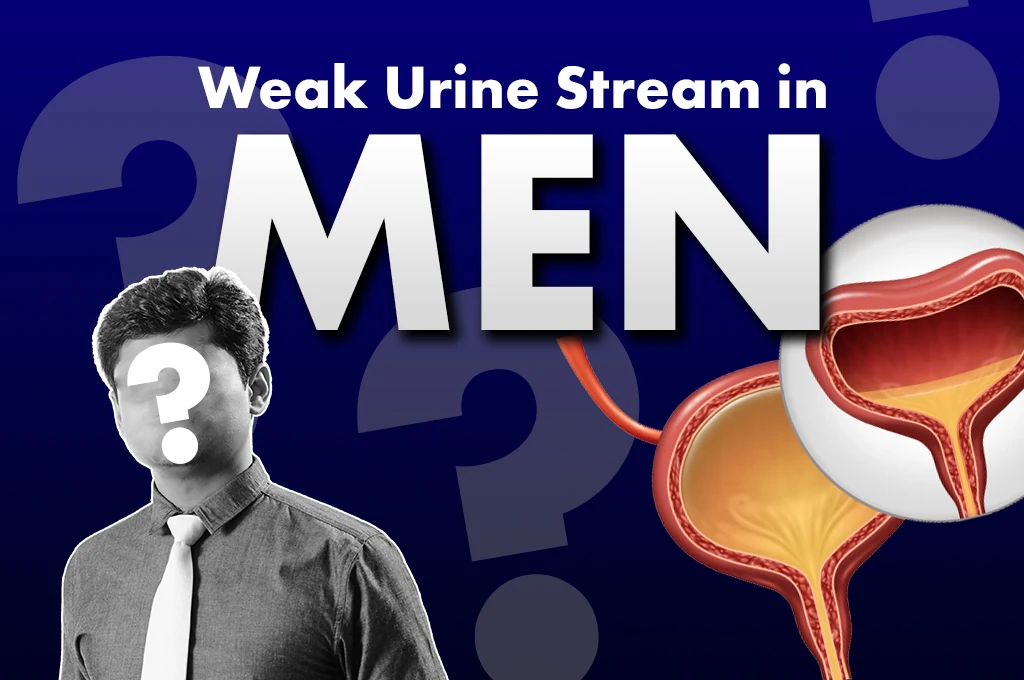
Weak Urine Stream in Men: Causes, Symptoms, Diagnosis & Treatment
Overview
Urination is a natural process of the human body, which enables the removal of waste matter and excess fluids.
In a normal urination mechanism, urine flows out of the bladder through the urethra. However, there are instances
where a man may find it hard to urinate because the flow of urine is slow, weak, or interrupted. This is generally
referred to as a weak urine stream.
Even though variations in urine flow may not be of much concern, a persistent weak urine stream may indicate an
underlying problem with the urinary system. Knowing the possible causes, signs, and when to seek medical attention
may help address the problem at an early stage.
What Is a Weak Urine Stream?
A weak urine stream refers to a noticeable reduction in the strength or force of urine flow during urination.
Instead of flowing steadily, urine may come out slowly, intermittently, or with reduced pressure.
Some men may also experience difficulty starting urination or feel that the bladder is not completely empty after
using the bathroom. In many cases, this symptom develops gradually and may worsen over time if the underlying cause
is not addressed.
Because the urinary system is closely linked with the bladder, prostate, and urethra, problems affecting any of
these structures can influence urine flow.
Common Symptoms Associated with Weak Urine Stream
- Slow or reduced urine flow
- Difficulty starting urination
- Dribbling after urination
- Intermittent or stop-and-start flow
- Feeling of incomplete bladder emptying
- Frequent urination, especially at night
- Straining while urinating
Persistent changes in urine flow should not be ignored.
Possible Causes of Weak Urine Stream in Men
Enlarged Prostate (Benign Prostatic Enlargement)
One of the most common causes, especially with aging, is enlargement of the prostate gland. This can press against
the urethra and restrict urine flow.
Urethral Narrowing
Narrowing of the urethra due to scarring or inflammation can slow down urine flow.
Bladder Muscle Weakness
Weak bladder muscles may not contract efficiently, leading to incomplete emptying.
Urinary Tract Infections
Infections can cause inflammation and temporarily interfere with urine flow.
Nerve-Related Conditions
Nerve problems can disrupt the coordination required for proper urination.
Bladder Stones or Obstruction
Physical blockages in the urinary tract may interfere with normal urine flow.
How Aging Affects Urine Flow
As men age, changes in the urinary system may occur. The prostate may enlarge, and bladder function may decline.
- Slower urine flow
- Frequent urination
- Difficulty emptying the bladder
Why a Weak Urine Stream Should Not Be Ignored
A weak urine stream may seem minor but can signal an underlying issue. If the bladder does not empty completely,
it can increase the risk of infections and discomfort.
Early medical consultation can help identify the cause and prevent complications.
Diagnosis
Doctors usually begin with a review of symptoms and medical history. A physical examination may be conducted, and
tests may be recommended to assess bladder and urinary tract function.
The goal is to identify whether the issue is related to the prostate, bladder, or urethra and guide treatment.
Treatment
Treatment depends on the underlying cause. It may involve lifestyle changes, medical management, or supportive care
to improve bladder function.
Monitoring symptoms and maintaining urinary health are essential parts of management.
Supporting Urinary Health
- Drink adequate water
- Maintain a balanced diet
- Stay physically active
- Avoid excess caffeine and alcohol
- Practice healthy bladder habits
- Attend regular health checkups
Conclusion
A weak urine stream in men can result from various factors, including prostate enlargement, urinary tract issues,
or bladder function changes. Persistent symptoms should not be overlooked.
Understanding the causes and seeking medical attention early can help manage the condition effectively and maintain
overall urinary health.