



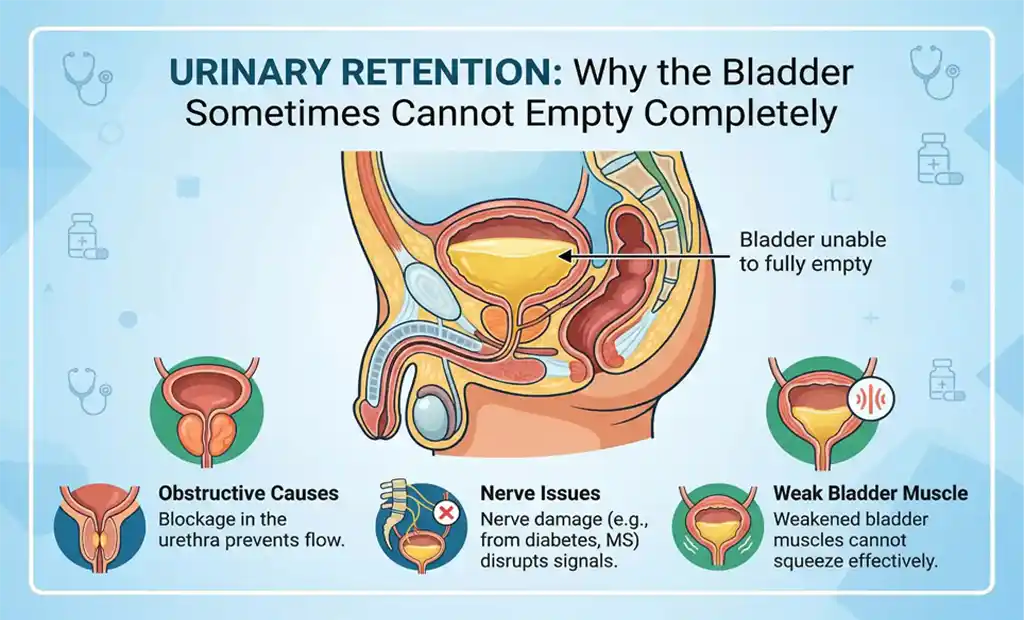
Urinary Retention: Why the Bladder Cannot Empty Completely
Overview: Urinary retention is a condition where the bladder cannot empty completely. Understanding its causes, symptoms, and treatment helps prevent complications.
Overview
Urination is an essential function that removes waste and excess fluids from the body. Normally, the bladder fills and empties completely. However, sometimes the bladder may not empty fully or may fail to release urine entirely. This condition is known as urinary retention.
It can occur suddenly or develop over time. While it can affect anyone, it is more common in men, especially with age due to prostate-related issues.
What Is Urinary Retention?
Urinary retention is the inability to completely empty the bladder. In some cases, urine remains after urination, while in others, a person may be unable to urinate at all.
Types:
- Acute Urinary Retention: Sudden, painful, and requires emergency care.
- Chronic Urinary Retention: Develops gradually and may go unnoticed initially.
Common Causes
- Enlarged Prostate: Blocks urine flow in men.
- Urethral Obstruction: Stones, strictures, or tumors.
- Bladder Muscle Weakness
- Nerve Problems
- Medications
- Infections
- Post-Surgical Effects
Symptoms
Acute:
- Sudden inability to urinate
- Severe lower abdominal pain
- Swelling in abdomen
Chronic:
- Weak urine flow
- Frequent urination
- Incomplete emptying feeling
- Night urination
Possible Complications
- Urinary tract infections (UTIs)
- Bladder damage
- Kidney damage
- Bladder stones
Diagnosis
- Medical history and examination
- Bladder ultrasound
- Urine tests
- CT scan / imaging
- Urodynamic tests
Treatment Options
- Catheterisation
- Medications
- Minimally invasive procedures
- Surgery
- Lifestyle changes
When to See a Doctor
Seek immediate medical help if you cannot urinate and feel pain or swelling.
Even mild symptoms should not be ignored, as early diagnosis prevents complications.
Supporting Urinary Health
- Stay hydrated
- Avoid excess caffeine and alcohol
- Regular medical check-ups
Urinary retention may seem minor but can indicate serious underlying issues. Early care ensures better outcomes.