



Overview
Acidity or heartburn is a common health complaint that people experience at some time or another in their lives.
It may occur after eating a heavy or spicy meal. Acidity or heartburn that occurs occasionally may not be a serious
health concern. In some cases, it may go away on its own. However, when the burning sensation in the chest or upper
abdomen persists, it may indicate that there is some underlying health concern that needs to be addressed.
Acidity can disrupt your life when it persists and causes discomfort after eating your favorite food or when it
interferes with your sleep. It can also disrupt your life when it makes it difficult to eat your favorite food.
What Is Acidity and Heartburn?
The term acidity is used to describe the condition in which the acids produced in the stomach cause irritation
in the inner lining of the digestive tract. In this regard, it can be noted that heartburn is one of the common
signs of acidity, which is characterized by discomfort in the chest or upper abdominal area of the body.
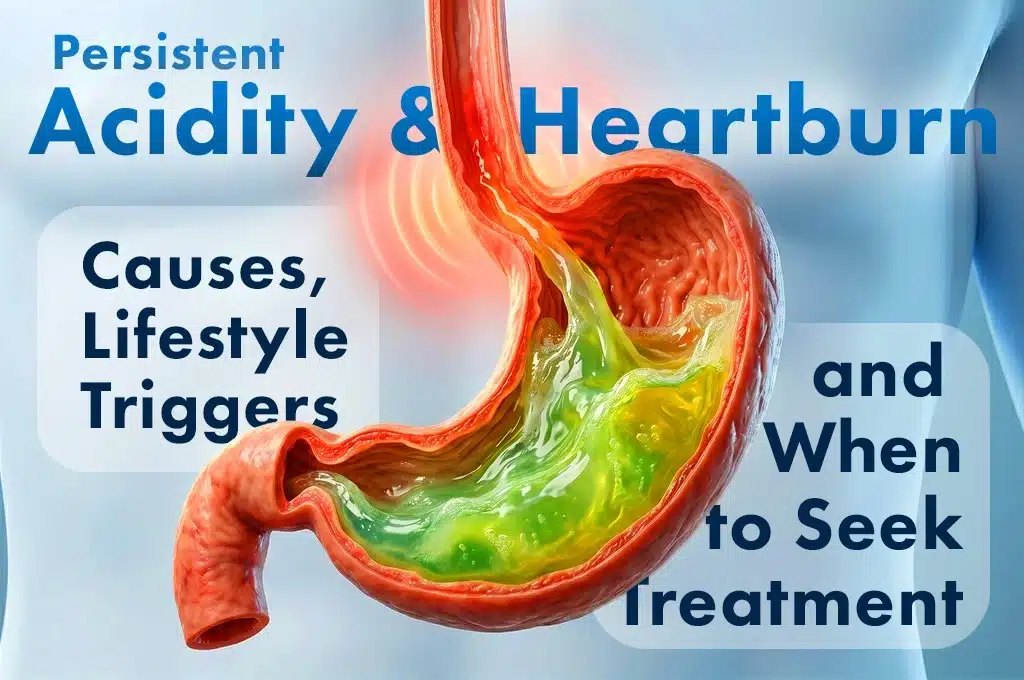
The feeling of heartburn is experienced as a result of the backflow of acids into the esophagus, which is the
passage from the mouth to the stomach. In this regard, it should be noted that the esophagus is not adapted to
the acids produced in the stomach. Despite the term “heartburn” containing the word “heart,” it is related to
the digestive system and not the heart.
Common Symptoms of Persistent Acidity
The symptoms of acidity differ from one person to another. While some might experience mild symptoms, others
might experience more prominent symptoms of acidity.
Common signs of acidity include:
- Feeling of burning in the chest after meals
- Sour or acidic taste in the mouth
- Bloating or fullness in the upper abdomen
- Frequent burping
- Discomfort that worsens after lying down
- A feeling of food coming back into the throat
In some cases, symptoms may become more noticeable at night or after heavy meals.
Why Does Persistent Acidity Occur?
The development of acidity occurs due to the upward movement of stomach acids into the esophagus. Usually, the
ring of muscle in the lower end of the esophagus functions as a valve to prevent the backflow of food from the
stomach into the esophagus.
If the valve does not work properly, it can allow stomach acids to leak into the esophagus, causing irritation.
Recurring irritation of the esophagus by acid can cause heartburn.
There are several reasons that can cause this condition, including food habits, lifestyle factors, and medical conditions.
Lifestyle Triggers That Can Worsen Acidity
Daily habits and food choices can play a significant role in triggering acidity. Identifying these triggers can
help reduce symptoms.
Spicy and Fatty Foods
Foods that are heavily spiced or high in fat can stimulate excess acid production and slow digestion, increasing
the likelihood of reflux.
Large or Heavy Meals
Eating large portions may increase pressure inside the stomach, making it easier for acid to move into the esophagus.
Late-Night Eating
Going to bed soon after eating can increase the risk of acid reflux because the body is lying down rather than upright.
Caffeine and Carbonated Drinks
Beverages like coffee, tea, and soda may cause the sphincter that prevents stomach acid from flowing upward to relax.
Smoking
Smoking may interfere with the normal functioning of the digestive system and may contribute to acid reflux.
Stress
Emotional stress can influence digestive function and may worsen acidity symptoms in some individuals.
Other Factors That May Contribute to Acidity
In addition to lifestyle triggers, several other factors may play a role in persistent acidity.
- Excess body weight
- Pregnancy
- Certain medications
- Digestive conditions affecting stomach function
- Delayed stomach emptying
These factors can increase pressure in the stomach or interfere with normal digestion.
Possible Complications of Untreated Acidity
Sometimes, acidity might not have serious complications, especially if it only occurs occasionally. However,
if the condition persists, it is crucial to take action to reduce the complications that might arise.
Continuous exposure of the esophagus to stomach acid may cause irritation and discomfort. In addition, the
esophagus may be affected, leading to complications in the digestion process.
Lifestyle Changes That May Help Reduce Acidity
Some changes in daily activities may help reduce symptoms and lower the risk of complications.
- Eating small meals instead of large meals
- Not lying down immediately after eating
- Reducing beverages that may trigger acidity
- Maintaining a healthy body weight
- Practicing stress-relieving activities
- Avoiding smoking and limiting caffeinated drinks
Diagnosis
When acidity or heartburn becomes frequent, healthcare professionals may evaluate symptoms and medical history
to understand the possible causes.
Questions about diet, lifestyle habits, and the timing of symptoms can help identify triggers.
In some cases, medical tests may be recommended to assess the digestive system and rule out other conditions
that could be causing similar symptoms.
The purpose of diagnosis is to identify the cause of symptoms and guide appropriate management.
Treatment
Treatment for persistent acidity depends on the severity of symptoms and the underlying cause.
In some individuals, lifestyle and dietary modifications may help relieve symptoms. Healthcare professionals
may also recommend medical options to control stomach acid and promote digestive comfort.
If symptoms continue despite treatment, further evaluation and additional management strategies may be required.
Treatment is generally personalized based on individual needs.
When to Seek Medical Advice
Medical consultation may be helpful if:
- Heartburn occurs frequently
- Symptoms persist for several weeks
- Discomfort interferes with daily activities
- There is difficulty swallowing or persistent throat irritation
- Over-the-counter remedies do not provide relief
Conclusion
Acidity and heartburn are among the most common digestive concerns and can be influenced by dietary habits,
lifestyle choices, and digestive disorders. Although acidity can be temporary, frequent symptoms should not be ignored.
Understanding the causes of acidity, making healthy lifestyle changes, and seeking timely medical advice can
help maintain digestive health and improve overall well-being.
Maintaining healthy dietary habits and following lifestyle modifications can play an important role in managing acidity effectively.