

Overview
Kidney disease is often called a “silent killer” because it develops without noticeable symptoms in the early stages. Many people assume that normal creatinine levels mean their kidneys are healthy. However, this is not always true.
Kidney damage can begin silently and progress significantly before creatinine levels rise. Understanding this hidden risk is essential for early detection and prevention of serious complications.
Can Kidney Disease Exist with Normal Creatinine?
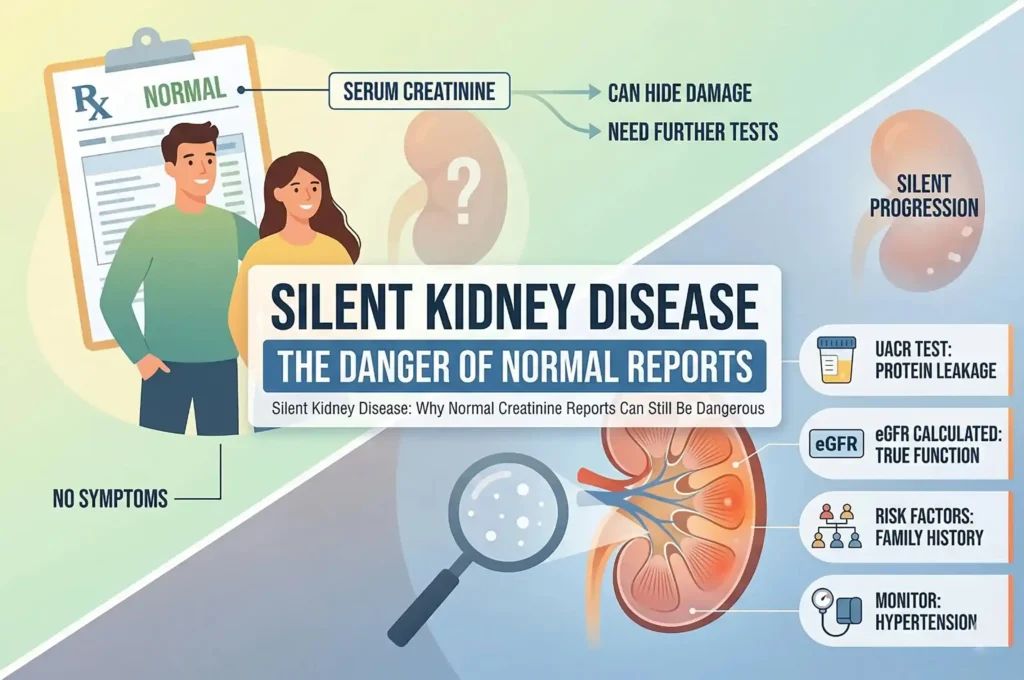
Yes, kidney disease can exist even when creatinine levels are normal. Creatinine is a late indicator of kidney damage, meaning it may only rise after a significant loss of kidney function has already occurred.
This is why relying only on creatinine levels can be misleading. Early-stage kidney disease often goes undetected without additional tests such as eGFR and urine analysis.
What Is Creatinine and Why Is It Tested?
Creatinine is a waste product generated by muscle metabolism. The kidneys filter creatinine from the blood and remove it through urine. Because of this, blood creatinine levels are commonly used to assess kidney function.
However, creatinine alone does not provide a complete picture of kidney health.
Important Fact
Creatinine is a late marker of kidney damage. By the time it rises, a significant portion of kidney function may already be lost.
Why Can Creatinine Be Normal in Kidney Disease?
1. Kidneys Have a High Functional Reserve
Each kidney contains nearly one million filtering units called nephrons. Even if some are damaged, the remaining nephrons can compensate and maintain normal creatinine levels.
Creatinine may stay normal until 40–50% of kidney function is already lost.
2. Creatinine Depends on Muscle Mass
Creatinine levels vary depending on muscle mass. Individuals with low muscle mass, elderly people, women, and malnourished individuals may have lower baseline creatinine levels, masking kidney dysfunction.
3. Early CKD Shows No Symptoms
In early stages of chronic kidney disease (CKD), patients usually experience no symptoms. This makes it difficult to detect kidney problems through routine tests alone.
The Importance of eGFR
Doctors use Estimated Glomerular Filtration Rate (eGFR) to assess kidney function more accurately.
eGFR considers:
- Creatinine levels
- Age
- Gender
- Body size
A person can have normal creatinine levels but reduced eGFR, indicating early kidney dysfunction.
Early Warning Signs That Are Often Ignored
- Persistent fatigue
- Swelling in the legs or face
- Foamy urine (protein loss)
- High blood pressure
- Frequent nighttime urination
- Loss of appetite
These symptoms are often overlooked but may indicate early kidney problems.
Who Is at Higher Risk?
High-risk groups include:
- People with diabetes
- Individuals with high blood pressure
- Family history of kidney disease
- Heart disease patients
- Long-term painkiller users
- People with recurrent urinary infections
- Obese individuals
- Elderly individuals
Regular kidney screening is essential for these individuals, even if creatinine levels appear normal.
The Role of Urine Tests
Urine tests can detect kidney problems much earlier than blood tests.
- Urine routine examination
- Urine albumin (protein)
- Urine microalbumin
Protein in urine is often the earliest sign of kidney damage.
Why Early Detection Matters
Kidney damage is usually irreversible, but early detection can slow or prevent progression.
Early treatment may include:
- Blood pressure control
- Diabetes management
- Dietary changes
- Reduced salt intake
- Avoiding unnecessary medications
- Lifestyle modifications
Advanced kidney disease may require dialysis or kidney transplantation.
Common Myths About Kidney Health
Myth 1: Normal urination means healthy kidneys
Truth: Urine output may remain normal even in advanced kidney disease.
Myth 2: No pain means no kidney problem
Truth: Kidney disease is usually painless in early stages.
Myth 3: Normal creatinine means no issue
Truth: Creatinine can remain normal in early kidney damage.
How Often Should You Check Your Kidneys?
- Healthy individuals: Once a year
- Diabetes or hypertension patients: Every 6 months
A complete kidney check includes:
- Serum creatinine
- eGFR
- Urine protein test
- Blood pressure monitoring
How to Protect Your Kidneys
- Control blood sugar
- Maintain healthy blood pressure
- Stay hydrated
- Reduce salt intake
- Avoid overuse of painkillers
- Exercise regularly
- Maintain healthy weight
- Get regular checkups
When Should You See a Specialist?
- Persistent swelling
- Abnormal urine reports
- High blood pressure
- Diabetes with protein in urine
- Family history of kidney disease
- Unexplained fatigue
Consult a nephrologist early instead of waiting for creatinine levels to rise.
Quick Summary
Kidney disease can exist even when creatinine levels are normal. Early detection through eGFR and urine tests is essential to prevent serious complications. Regular screening and healthy lifestyle choices can help protect kidney function and improve long-term health.
Conclusion
Silent kidney disease is dangerous because it progresses without symptoms. Creatinine alone does not provide a complete picture of kidney health.
If you are at risk or notice subtle changes in your health, consult a doctor for a comprehensive kidney evaluation. Early action can save kidney function and improve quality of life.