
Nephrology
- Home
- Services
- Nephrology
Best Nephrologist in Coimbatore – Advanced Kidney Care at Vedanayagam Hospital
At Vedanayagam Hospital, the Department of Nephrology provides comprehensive care for patients with kidney-related disorders, from early detection to advanced renal support therapies. Our team of experienced nephrology doctors and trained renal care staff deliver accurate diagnoses, continuous monitoring, and individualised treatment plans to preserve kidney function and improve quality of life.
We understand that kidney diseases often progress silently. Therefore, our specialists focus on early screening, preventive care, and long-term management under the guidance of an experienced kidney disease specialist and kidney disease doctor.
Our services cover the complete spectrum of kidney disease nephrology, including:
- Early detection of kidney dysfunction
- Acute kidney injury
- Chronic kidney disease
- Kidney stones
- End-stage renal disease
- Dialysis support
- Transplant evaluation and counselling
Patients seeking the best nephrology doctor in Coimbatore can rely on Vedanayagam Hospital for ethical, compassionate, and evidence-based treatment.
Kidney Care Expertise
Our department is led by highly trained physicians recognised as the in Coimbatore. Each chronic kidney disease specialist in our team works closely with urologists, intensivists, and nutritionists to provide multidisciplinary renal care.
We offer consultation, investigation, and long-term follow-up under the care of a qualified chronic kidney disease doctor, ensuring proper monitoring of kidney function and the prevention of complications.
Chronic Kidney Disease (CKD)
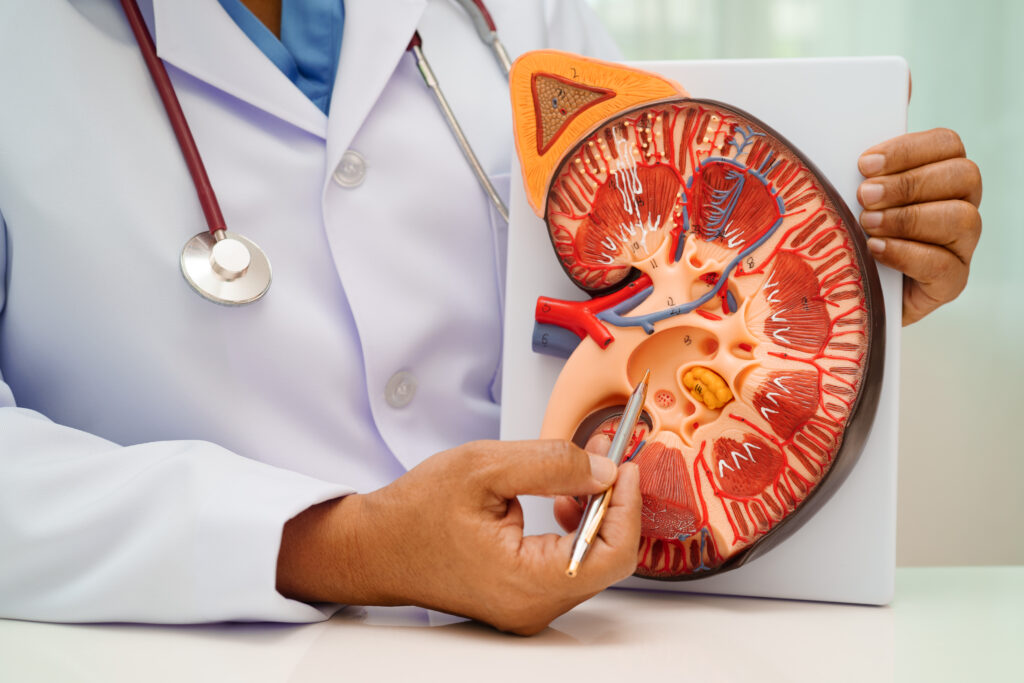
Chronic kidney disease occurs when the kidneys gradually lose their ability to filter waste products and maintain fluid balance. The kidneys regulate electrolyte balance, remove toxins, and help control blood pressure. When kidney function declines, harmful waste accumulates in the blood.
A chronic kidney disease doctor evaluates the patient using blood tests, urine analysis, and imaging studies to determine the stage of disease.
Common Causes
- Diabetes
- High blood pressure
- Recurrent infections
- Genetic kidney disorders
- Long-term medication use
- Urinary obstruction
CKD progresses through five stages from mild damage to kidney failure. Early treatment by a chronic kidney disease specialist can significantly slow disease progression and delay dialysis.
Acute Kidney Injury
Acute kidney injury is a sudden reduction in kidney function and is a medical emergency requiring immediate attention from a kidney disease doctor.
Causes include:
- Severe dehydration
- Infection (sepsis)
- Blood loss
- Drug toxicity
- Urinary blockage (stone, prostate enlargement, tumour)
Warning Signs
- Reduced urine output
- Swelling in the legs and face
- Nausea and vomiting
- Loss of appetite
- Persistent fatigue
- Lower back pain
Immediate evaluation by our best nephrologist team can prevent permanent kidney damage.
Kidney Stone Disease
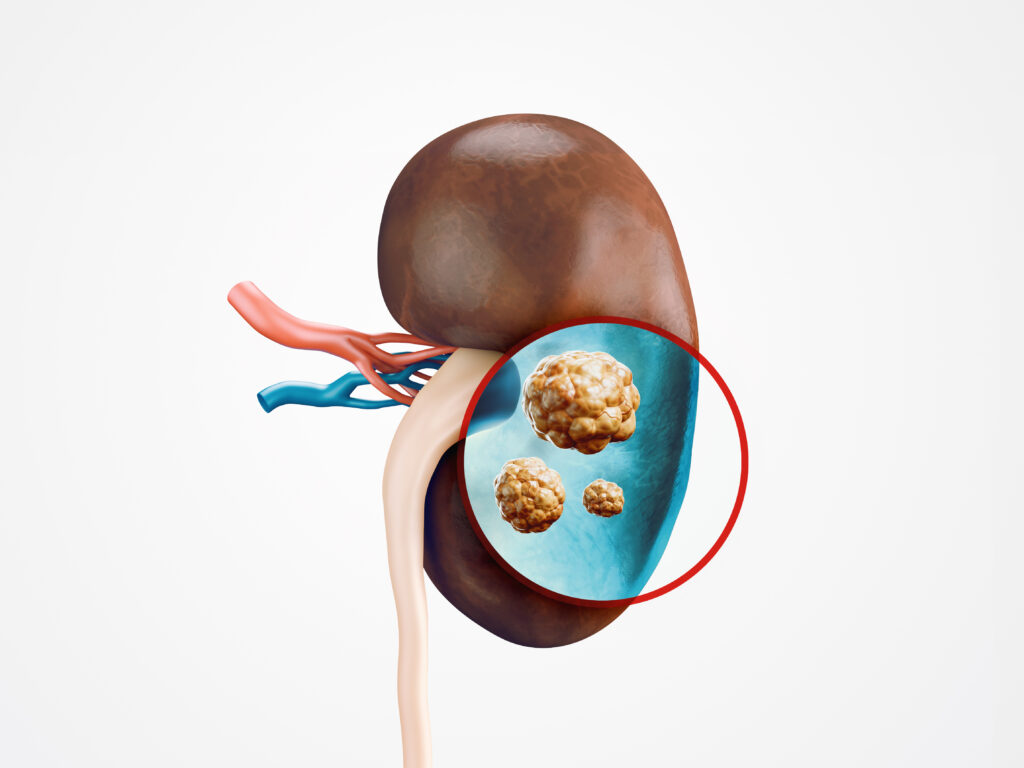
Kidney stones form when minerals crystallise inside the kidneys due to concentrated urine. Large stones block urine flow and cause severe pain.
Symptoms:
- Severe side or back pain
- Burning urination
- Blood in urine
- Frequent urination
- Nausea
Our hospital provides coordinated care between urology and nephrology to prevent recurrence. Patients receive dietary counselling, metabolic evaluation, and preventive therapy under the care of a kidney disease specialist.
Dialysis
Patients with renal failure receive dialysis treatment. Modern Dialysis equipment is used, and patients recovering in the ICU do not have to move for dialysis because the hospital provides a convenient, rapid bedside dialysis service across ICU beds. Haemodialysis and peritoneal dialysis are two different forms of dialysis therapies. Our facility offers both of these dialysis treatment options. Technically skilled dialysis professionals guarantee excellent patient monitoring during the treatment and provide individualised care. Throughout the course of the treatment, the patient’s condition is regularly tracked. To oversee the dialysis procedure, a medical officer with the appropriate training is constantly present. By strictly isolating patients and equipment, cross-infection is prevented. For various patient groups, there are even distinct washrooms.
For individuals who have the hepatitis virus, there are separate dialysis rooms. Our dialysis unit is highly organised, providing accurate appointments for each patient’s dialysis. Throughout the course of treatment, the patient’s condition is regularly monitored through monthly tests, yearly scans, and other expert assessments. At each dialysis appointment, the patient visits the nephrologist. Our team at the Department of Nephrology comprises Senior Consultants with extensive expertise in the management and treatment of kidney disorders, as well as skilled nurses and dialysis technicians who prioritise their patients’ needs first. Thus, the dialysis unit offers individualised, skilled, and modern treatment and effectively rehabilitates patients.
Peritoneal Dialysis
The patient may receive intermittent peritoneal dialysis up to 2 or 3 times per week. Following the patient’s admission, this is done. Typically, one treatment lasts for 24 hours. For reversible kidney surgery, this was formerly done. Since many patients have reversible renal failure, many patients might not need treatment more than a few times.
Patients receiving the other type of peritoneal dialysis are often those with end-stage renal failure and chronic kidney disorders. Continuous ambulatory peritoneal dialysis is what this is known as. This entails permanently inserting a patient’s peritoneal cavity with an extremely flexible peritoneal dialysis catheter. A qualified surgeon often does this under general anaesthesia. Nearly 2 litres of peritoneal dialysis fluid are fed into the belly once the catheter is placed in the abdomen, and it is removed after 4 hours. Waste materials from the patient’s blood seep into the fluid during this 4-hour period, lowering the level of waste concentration in the body.
At the conclusion of the four hours, this fluid is withdrawn, and new fluid is injected. Every day, it is done three times. This may also be done hygienically at home. It would be beneficial if the patient could receive assistance from a family member with the necessary training in this area. These patients do not frequently visit the hospital, but they are required to have appointments with nephrologists once a month. Typically, a patient takes supplies for a month at a time. For this type of treatment to be carried out successfully and without complications, proper adherence to sterile practices and persistent adherence to the doctor’s instructions are crucial. This is known as Continuous ambulatory peritoneal dialysis (CAPD). Patients who cannot travel to a hemodialysis centre or experience problems during hemodialysis are the best candidates for this CAPD therapy. We are experts in caring for patients with CAPD.
Renal Transplant Evaluation & Counselling
For patients with permanent kidney failure, kidney transplantation offers the best long-term outcome and improved lifestyle compared to lifelong dialysis.
Our nephrology department provides:
- Pre-transplant evaluation
- Donor compatibility testing
- Post-transplant follow-up
- Rejection prevention counselling
We guide patients and families through both living donor and deceased donor transplant processes. Proper follow-up by a kidney disease specialist ensures long-term graft survival.
Frequently Asked Questions About Gastroenterology
You should consult a nephrologist if you have swelling in the legs or face, reduced urine output, blood in urine, uncontrolled blood pressure, diabetes, or abnormal kidney function reports. Early consultation helps prevent permanent kidney damage.
A nephrologist treats kidney diseases with medications and long-term medical management, including chronic kidney disease and dialysis care. A urologist is a surgeon who performs procedures or surgeries for kidney stones, prostate problems, and urinary tract conditions.
Early kidney disease may not cause symptoms. However, warning signs can include fatigue, swelling of the feet, foamy urine, frequent urination at night, loss of appetite, and high blood pressure. Regular screening is especially important for patients with diabetes and hypertension.
Dialysis is required when the kidneys lose most of their filtering ability and cannot remove toxins and excess fluids from the body. Your doctor will recommend dialysis based on blood test results, symptoms, and the stage of kidney failure.
Chronic kidney disease usually cannot be completely reversed, but it can be controlled. With early treatment, medication, diet changes, and regular monitoring, disease progression can be slowed, and dialysis can often be delayed.
You can protect your kidneys by drinking adequate water, controlling diabetes and blood pressure, avoiding unnecessary painkillers, reducing salt intake, maintaining a healthy weight, and undergoing regular kidney checkups if you are at risk.