


Overview
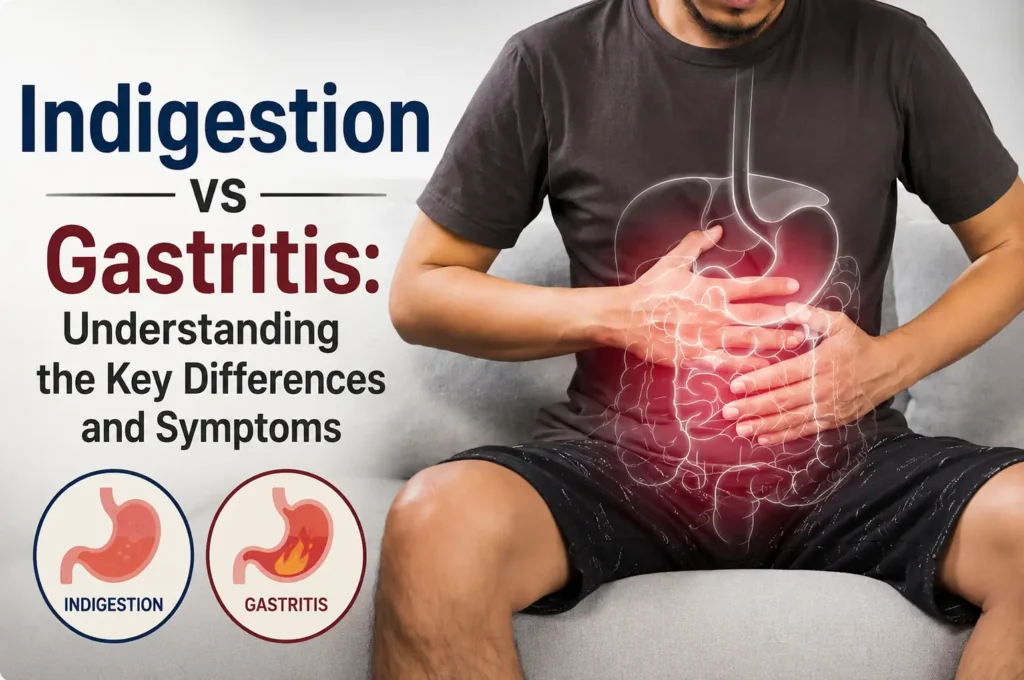
Digestive discomfort is a common complaint that many people experience at some point. Symptoms such as bloating, stomach pain, a burning sensation, or heaviness after meals are often casually referred to as “acidity” or “gas.” However, these symptoms can result from different digestive conditions, most commonly indigestion and gastritis.
Although they share similar symptoms, indigestion and gastritis are different conditions. Understanding their causes, symptoms, and key differences can help you recognize when simple lifestyle changes are sufficient and when medical attention may be necessary.
What Is Indigestion?
Indigestion, also known as dyspepsia, refers to a group of symptoms that cause discomfort in the upper abdomen, usually after eating. It is not a disease itself but rather a symptom of digestive disturbance.
Common Features of Indigestion
- Feeling full soon after starting a meal
- Bloating or heaviness
- Mild upper abdominal discomfort
- Burping or excessive gas
- Nausea
Indigestion is usually temporary and commonly related to eating habits or lifestyle factors.
What Is Gastritis?
Gastritis is a condition in which the lining of the stomach becomes inflamed. The inflammation may be mild or severe and can develop suddenly (acute gastritis) or gradually over time (chronic gastritis).
Unlike indigestion, gastritis is a medical condition that involves inflammation and damage to the stomach lining.
Common Features of Gastritis
- Burning pain in the upper abdomen
- Nausea or vomiting
- Loss of appetite
- Stomach irritation or discomfort
- Persistent or severe abdominal pain in some cases
Key Differences Between Indigestion and Gastritis
Although both conditions affect the stomach, they differ in several important ways.
| Feature | Indigestion | Gastritis |
|---|---|---|
| Nature | Digestive symptom or temporary discomfort | Inflammation of the stomach lining |
| Common Causes | Overeating, spicy foods, stress, poor eating habits | Stomach irritation, infection, medications, alcohol, lifestyle factors |
| Duration | Usually short-term | May be acute or chronic |
| Severity | Generally mild | Often more persistent and uncomfortable |
Common Causes
Causes of Indigestion
- Eating too quickly or overeating
- Consuming oily or spicy foods
- Irregular meal timings
- Stress or anxiety
- Excess caffeine or carbonated beverages
Causes of Gastritis
- Irritation of the stomach lining
- Long-term use of certain medications
- Alcohol consumption
- Stomach infections
- Chronic digestive disorders
Symptoms: How to Tell the Difference
Indigestion Symptoms
- Feeling full after meals
- Bloating and excessive gas
- Mild upper abdominal discomfort
- Occasional nausea
Gastritis Symptoms
- Burning pain in the upper abdomen
- Persistent stomach discomfort
- Nausea or vomiting
- Reduced appetite
In general, gastritis symptoms tend to be more persistent and severe than those associated with indigestion.
When Should You Be Concerned?
While occasional indigestion is usually harmless, persistent digestive symptoms should not be ignored.
Seek medical advice if you experience:
- Symptoms that occur frequently or last for several days
- Severe or worsening stomach pain
- Persistent nausea or vomiting
- Significant loss of appetite
- Digestive symptoms that interfere with daily activities
Diagnosis
Diagnosis begins with a discussion of your symptoms, eating habits, and medical history.
Your healthcare provider may:
- Review your symptoms and lifestyle
- Perform a physical examination
- Recommend tests to evaluate digestive health
Additional investigations may be required to confirm gastritis or rule out other digestive conditions. The goal is to distinguish temporary indigestion from underlying stomach disorders.
Treatment
Treatment for Indigestion
Management typically includes:
- Improving eating habits
- Avoiding foods that trigger symptoms
- Managing stress effectively
- Eating meals at regular times
Most cases improve with simple lifestyle modifications Gastroenterology Hospital in Coimbatore.
Treatment for Gastritis
Treatment generally focuses on:
- Reducing irritation of the stomach lining
- Avoiding substances that worsen symptoms
- Supporting healing of the stomach lining
- Managing underlying contributing factors
Persistent gastritis may require ongoing medical care and regular follow-up.
Lifestyle Tips for Better Digestive Health
- Eat smaller, balanced meals.
- Avoid overeating.
- Limit spicy, oily, and processed foods.
- Reduce caffeine and alcohol intake.
- Stay well hydrated.
- Manage stress through relaxation techniques.
- Avoid lying down immediately after meals.
Preventive Awareness
Pay attention to your body’s signals. Occasional indigestion is common, but persistent digestive discomfort should never be ignored. Early evaluation can help identify underlying conditions before they become more serious.
Conclusion
Although indigestion and gastritis may produce similar symptoms, they differ significantly in their causes and severity. Indigestion is generally a temporary digestive discomfort often related to eating habits, whereas gastritis involves inflammation of the stomach lining and may require medical treatment. Understanding these differences, recognizing warning signs, and maintaining healthy lifestyle habits can help support digestive health and ensure timely medical care when needed.