



Overview
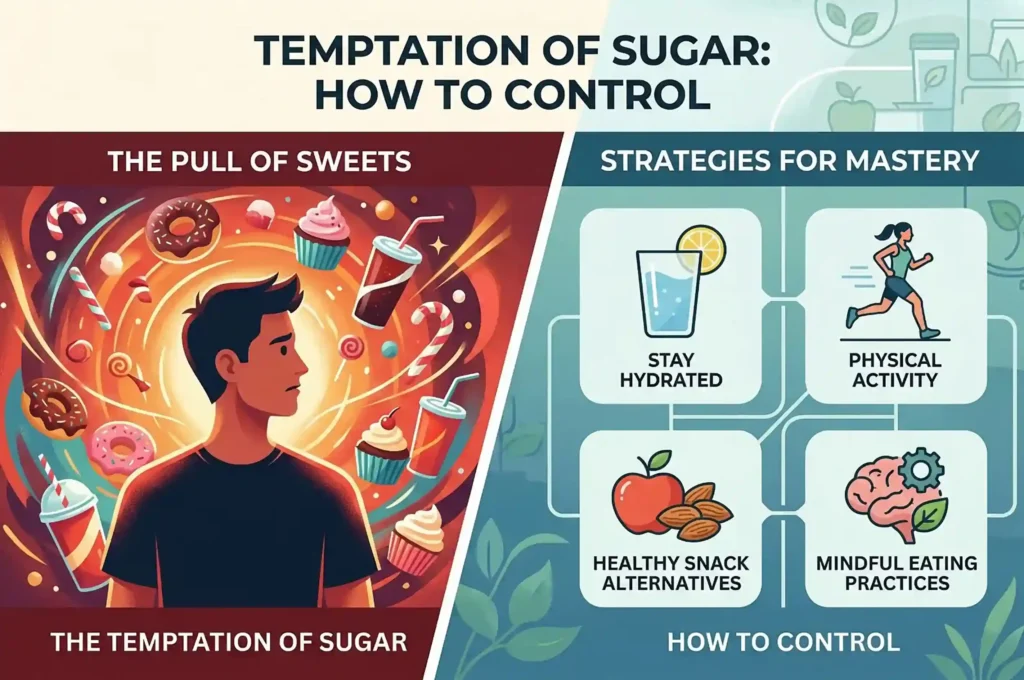
The temptation of sugar is a challenge faced by many, as sugary treats often provide comfort, quick energy, and an irresistible taste. However, excessive sugar consumption can lead to health concerns such as weight gain, diabetes, and heart disease. Learning to control this craving is essential for maintaining overall health and well-being.
Understanding the Sugar Temptation
Sugar cravings are driven by both biological and psychological factors. Consuming sugar releases dopamine, the “feel-good” chemical, creating a temporary sense of pleasure. This reward mechanism encourages repetitive consumption, making it difficult to resist sugary foods.
Additionally, stress, lack of sleep, and an unbalanced diet can increase these cravings, leading to overconsumption.
The Impact of Excessive Sugar Intake
High sugar intake is linked to several health problems, including obesity, type 2 diabetes, and cardiovascular diseases. It can also cause mood swings, fatigue, and an increased risk of tooth decay.
Understanding these risks can motivate individuals to reduce their sugar consumption and adopt healthier habits.
Effective Strategies to Control Sugar Temptation
Focus on Balanced Meals
Eating balanced meals with protein, healthy fats, and fiber helps stabilize blood sugar levels and reduce sudden cravings. Whole grains, lean proteins, and vegetables help keep you full for longer.
Stay Hydrated
Sometimes thirst is mistaken for hunger or sugar cravings. Drinking enough water throughout the day helps prevent unnecessary snacking.
Mindful Snacking
Replace sugary snacks with healthier options such as fruits, nuts, yogurt, or dark chocolate. These provide natural sweetness along with essential nutrients.
Plan Ahead
Preparing meals in advance helps avoid impulsive food choices. Keeping healthy snacks available reduces the chances of reaching for sugary foods.
Read Food Labels
Sugar is often hidden in processed foods under names like high-fructose corn syrup, sucrose, or maltose. Reading labels helps you make informed decisions.
Manage Stress
Stress can lead to emotional eating and increased sugar consumption. Activities such as meditation, yoga, and hobbies can help reduce stress levels.
Get Adequate Sleep
Poor sleep disrupts hormones that regulate hunger, leading to increased cravings for sugary foods. Aim for 7–9 hours of quality sleep each night.
Set Gradual Goals
Reducing sugar intake gradually allows your taste buds to adjust. Start by cutting down sugar in beverages or choosing unsweetened alternatives.
Indulge in Moderation
Completely avoiding sugar can sometimes lead to binge eating. Enjoying small portions occasionally helps maintain balance.
Seek Support
Sharing your goals with friends or family creates accountability. Consulting a nutritionist can provide personalized guidance.
The Role of Natural Alternatives
Natural sweeteners like honey, maple syrup, and stevia can be used as alternatives to refined sugar. While they should still be consumed in moderation, they are less processed and may offer additional nutrients.
Building Long-Term Healthy Habits
Over time, reducing sugar intake helps reset taste preferences, making less sugary foods more enjoyable. Focusing on whole, unprocessed foods supports long-term health and reduces dependency on sugar.
Conclusion
Managing sugar cravings is not about complete restriction but about making mindful choices. By understanding the causes of cravings and adopting healthier habits, individuals can enjoy sweetness in moderation while maintaining overall well-being.
With consistency and awareness, it is possible to reduce sugar dependence and lead a healthier, more energetic life.