

Acidity vs GERD: How to Tell the Difference
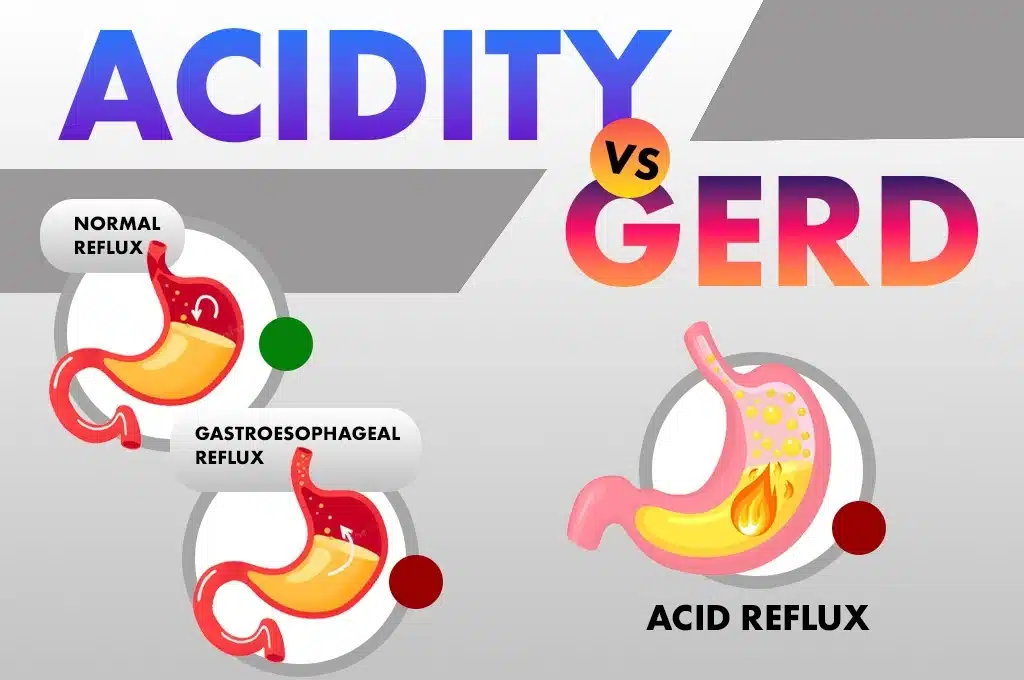
Digestive discomfort is common and often described as “acidity.” However, not all symptoms are the same. Some may indicate GERD (Gastroesophageal Reflux Disease), a more serious condition.
Understanding the difference between acidity and GERD helps in early diagnosis and prevents long-term complications.
What is Acidity?
Acidity occurs when excess stomach acid causes irritation in the digestive tract. It is usually temporary and triggered by lifestyle habits.
Common Causes of Acidity
- Spicy or oily foods
- Large or late-night meals
- Caffeine and carbonated drinks
- Irregular eating habits
- Stress and lack of sleep
- Smoking and alcohol
Symptoms of Acidity
- Burning sensation (heartburn)
- Sour taste in the mouth
- Bloating and gas
- Mild abdominal discomfort
- Occasional nausea
What is GERD?
GERD is a chronic condition where stomach acid flows back into the esophagus due to a weak lower esophageal sphincter (LES).
Unlike acidity, GERD is persistent and may affect daily life and sleep.
Symptoms of GERD
- Frequent heartburn
- Regurgitation
- Difficulty swallowing
- Chronic cough
- Throat irritation
- Hoarseness
- Chest discomfort
Key Differences Between Acidity and GERD
| Feature | Acidity | GERD |
|---|---|---|
| Frequency | Occasional | Frequent |
| Duration | Short-term | Long-term |
| Cause | Excess stomach acid | Acid reflux into esophagus |
| Severity | Mild | Moderate to severe |
| Impact | Resolves easily | Needs medical care |
Warning Signs to Watch
- Heartburn more than twice a week
- Difficulty swallowing
- Unexplained weight loss
- Persistent cough
- Chest discomfort
Possible Complications of GERD
- Esophagitis (inflammation)
- Narrowing of esophagus
- Chronic throat issues
- Voice problems
Diagnosis
Doctors may evaluate symptoms, medical history, and perform tests to confirm whether the condition is temporary acidity or GERD.
Treatment
- Lifestyle and dietary changes
- Avoid trigger foods
- Maintain healthy weight
- Medical treatment if required
Lifestyle Changes to Reduce Acid Reflux
- Eat smaller meals
- Avoid late-night eating
- Limit spicy and fried foods
- Reduce caffeine intake
- Stay upright after meals
- Manage stress
When to Consult a Doctor?
- Symptoms occur regularly
- Last for several weeks
- Do not improve with medication
- Affect daily life
Conclusion
While acidity is common and temporary, GERD is a chronic condition that requires attention. Early diagnosis and lifestyle changes can help prevent complications and maintain digestive health.