



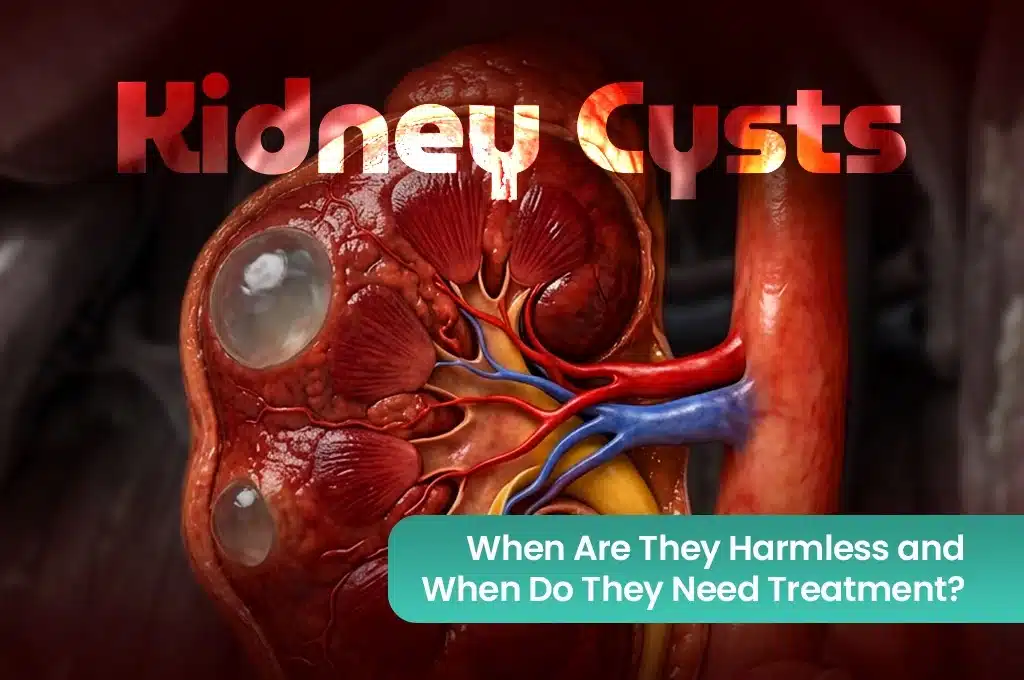
Kidney Cysts: When Are They Harmless and When Do They Need Treatment?
Receiving a diagnosis of a kidney cyst can be worrying. In many cases, kidney cysts are discovered accidentally during imaging tests such as an ultrasound or CT scan performed for an unrelated health concern. Although hearing that you have a cyst may sound alarming, most kidney cysts are harmless and do not require treatment.
However, some kidney cysts can grow larger, become infected, cause pain, affect kidney function, or show features that require further medical evaluation. Understanding the difference between harmless and potentially serious kidney cysts can help you make informed decisions about your health.
What Are Kidney Cysts?
A kidney cyst is a fluid-filled sac that develops inside or on the surface of a kidney. They can vary in size, ranging from a few millimeters to several centimeters.
Types of Kidney Cysts
Simple Kidney Cysts
Simple kidney cysts are the most common type and usually have the following characteristics:
- Thin walls
- Clear fluid inside
- Oval or round shape
- No solid components
These cysts are benign and generally do not cause health problems.
Complex Kidney Cysts
Complex kidney cysts may contain:
- Thick walls
- Internal septa (partitions)
- Calcifications
- Solid components
Because some complex cysts have a higher risk of being cancerous, they require closer monitoring and evaluation.
Are Kidney Cysts Common?
Kidney cysts become more common with age.
- Many adults over 50 develop at least one kidney cyst.
- Simple kidney cysts occur more frequently in men.
- Most cysts are found incidentally during imaging tests.
- Most kidney cysts do not affect kidney function or cause symptoms.
Causes of Kidney Cysts
The exact cause of simple kidney cysts is not fully understood. Researchers believe they may develop when small kidney tubules become weakened or blocked.
Risk factors include:
- Increasing age
- Male gender
- High blood pressure
- Family history of kidney disease
Some kidney cysts are associated with inherited conditions such as Polycystic Kidney Disease (PKD).
What Is Polycystic Kidney Disease (PKD)?
Polycystic Kidney Disease is an inherited disorder in which numerous cysts develop inside the kidneys.
Unlike simple kidney cysts, PKD can:
- Enlarge the kidneys
- Cause high blood pressure
- Reduce kidney function
- Lead to chronic kidney disease or kidney failure
People with a family history of PKD should undergo appropriate screening.
Symptoms of Kidney Cysts
Most simple kidney cysts do not cause symptoms. Symptoms usually appear only when complications develop.
Flank Pain
A growing cyst may press against surrounding tissues and cause pain in the side or back.
Abdominal Discomfort
Large cysts may create a feeling of fullness or abdominal pressure.
Blood in the Urine
If a cyst ruptures or bleeds, blood may appear in the urine.
Urinary Tract Infections
An infected cyst can increase the risk of recurrent urinary tract infections.
High Blood Pressure
Some kidney cysts may contribute to elevated blood pressure.
Reduced Kidney Function
Large or multiple cysts may interfere with normal kidney function.
When Are Kidney Cysts Considered Harmless?
Simple kidney cysts are generally harmless when they:
- Have thin walls
- Contain only fluid
- Do not cause symptoms
- Do not affect kidney function
- Remain stable in size
In these situations, treatment is usually unnecessary. Doctors may recommend periodic imaging to monitor the cyst.
When Do Kidney Cysts Need Treatment?
1. Persistent Pain
Large cysts can cause chronic pain in the back, abdomen, or side that interferes with daily activities.
2. Large Kidney Cysts
Very large cysts may compress nearby tissues and interfere with urine drainage.
Possible symptoms include:
- Pain
- Pressure
- Poor kidney drainage
3. Infection
An infected kidney cyst requires prompt medical treatment.
Symptoms include:
- Fever
- Chills
- Severe pain
- Difficulty urinating
Treatment may involve antibiotics and drainage.
4. Bleeding Inside the Cyst
Sometimes a cyst can bleed internally.
Signs include:
- Sudden flank pain
- Blood in the urine
- Tenderness
Medical evaluation is essential to determine the severity.
5. Suspicion of Cancer
Complex kidney cysts with the following characteristics require additional evaluation:
- Thick walls
- Solid components
- Irregular shape
- Contrast enhancement on imaging
How Are Kidney Cysts Diagnosed?
Ultrasound
Ultrasound is usually the first imaging test performed. It helps:
- Detect kidney cysts
- Measure cyst size
- Differentiate simple and complex cysts
CT Scan
CT scans provide detailed information about:
- Cyst structure
- Calcifications
- Internal contents
- Possible malignancy
MRI Scan
MRI may be recommended when further evaluation is necessary.
Kidney Function Tests
Blood and urine tests help evaluate overall kidney function.
Treatment for Kidney Cysts
Observation
Simple kidney cysts without symptoms usually require only regular monitoring.
Cyst Aspiration and Sclerosis
If symptoms develop, doctors may:
- Drain the cyst using a needle
- Inject a special solution to reduce recurrence
This procedure is performed under imaging guidance.
Laparoscopic Surgery
Large or recurrent kidney cysts may require minimally invasive laparoscopic surgery to remove or drain the cyst.
Treatment for Cancerous Cysts
If cancer is suspected or confirmed, treatment options may include:
- Partial nephrectomy
- Radical nephrectomy
Can Kidney Cysts Be Prevented?
There is currently no proven way to prevent simple kidney cysts. However, maintaining kidney health is important.
- Drink adequate water
- Control blood pressure
- Manage diabetes
- Maintain a healthy weight
- Avoid smoking
- Schedule regular health check-ups
These healthy habits support overall kidney function and general well-being.
Conclusion
Kidney cysts are common, particularly in older adults, and most are harmless. Simple kidney cysts usually require only periodic monitoring, while complex cysts or cysts causing pain, infection, bleeding, or reduced kidney function need further evaluation and treatment.
If you experience persistent flank pain, blood in the urine, recurrent urinary tract infections, or have concerns about a kidney cyst discovered during imaging, consult a urologist. Early evaluation can help identify complications promptly while providing reassurance when the cyst is benign.