

Overview
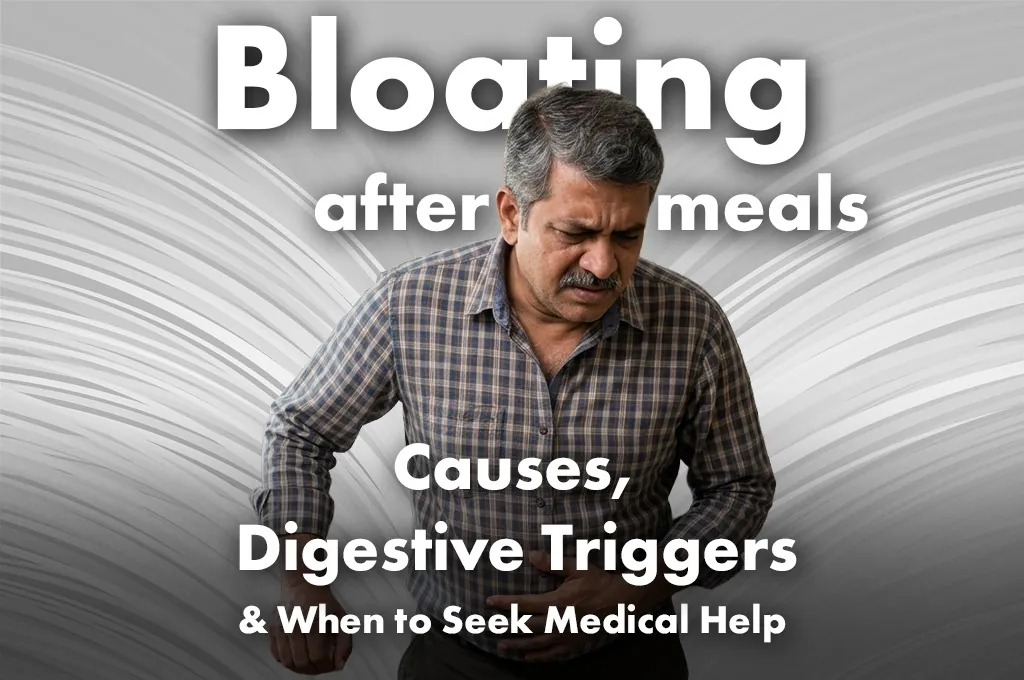
Digestive problems are common, and many people experience a feeling of fullness or a swollen abdomen after eating. This condition is known as bloating.
While occasional bloating may occur after large or heavy meals, persistent bloating may indicate that the digestive system is reacting to certain foods or underlying health conditions.
Understanding the causes and digestive triggers can help manage symptoms effectively and identify when medical attention is needed.
What Is Bloating?
Bloating refers to a feeling of fullness, tightness, or swelling in the abdomen, often accompanied by gas or pressure in the digestive system.
It commonly occurs after eating and usually resolves over time. In many cases, bloating is caused by gas buildup during digestion, but it can also result from slower digestion or food intolerance.
While occasional bloating is normal, frequent bloating may indicate an underlying digestive issue.
Common Symptoms of Post-Meal Bloating
- Feeling of fullness or pressure in the abdomen
- Visible abdominal swelling
- Excessive gas or belching
- Abdominal discomfort or mild pain
- Heaviness after eating
- Changes in bowel habits (in some cases)
Why Bloating Happens After Eating
Bloating after eating occurs due to various digestive processes. Gas production and slow digestion are common reasons.
Swallowing Excess Air
Eating quickly, talking while eating, or drinking carbonated beverages can lead to excess air intake, causing bloating.
Overeating
Eating large meals stretches the stomach, leading to a bloated feeling.
Gas Production During Digestion
Certain foods produce more gas during digestion, causing abdominal discomfort.
Slower Digestion
Slow movement of food in the digestive system can result in gas buildup and bloating.
Common Digestive Triggers
Gas-Producing Foods
- Beans and lentils
- Broccoli and cabbage
- Onions and garlic
- Carbonated drinks
Food Intolerance
Lactose or carbohydrate intolerance can lead to bloating after meals.
High-Fat Meals
Fatty foods slow digestion, contributing to fullness and bloating.
Artificial Sweeteners
Some sweeteners are difficult to digest and may cause gas formation.
Lack of Physical Activity
Being inactive after meals can slow digestion and increase bloating.
Other Possible Causes
- Irritable bowel syndrome (IBS)
- Constipation
- Slow digestion
- Food sensitivities
- Hormonal changes
How Digestive Health Affects Bloating
A healthy digestive system depends on proper balance between stomach acids, enzymes, and gut bacteria.
When this balance is disrupted, digestion slows and gas production increases, leading to bloating.
Diagnosis
Doctors evaluate symptoms, diet, and medical history to identify causes of bloating.
Basic tests may be recommended to assess digestive health and rule out conditions.
Treatment
Treatment focuses on improving digestion and reducing triggers.
- Dietary changes
- Improved eating habits
- Identifying trigger foods
- Medical care if needed
Tips to Reduce Bloating After Meals
- Eat slowly and chew properly
- Avoid large meals
- Limit carbonated drinks
- Identify trigger foods
- Stay physically active
- Maintain regular bowel habits
When to Seek Medical Help
Seek medical advice if bloating is associated with:
- Severe abdominal pain
- Unexplained weight loss
- Nausea or vomiting
- Changes in bowel habits
- Blood in stool
Conclusion
Bloating after meals is common and often related to diet and digestion. However, frequent bloating may indicate underlying digestive issues.
Understanding triggers and maintaining healthy habits can help manage symptoms effectively.