



Urethral Stricture – Symptoms, Causes & Treatment Options
Overview
Urination is a natural process through which the body eliminates waste and excess fluid. For this process to occur smoothly, urine must pass freely from the bladder through the urethra.
When the urethra becomes narrowed or blocked, the normal flow of urine is affected. This condition is known as urethral stricture.
It can lead to difficulty in urination, discomfort, and other urinary problems. Although it can affect people of all ages, it is more common in men.
What Is Urethral Stricture?
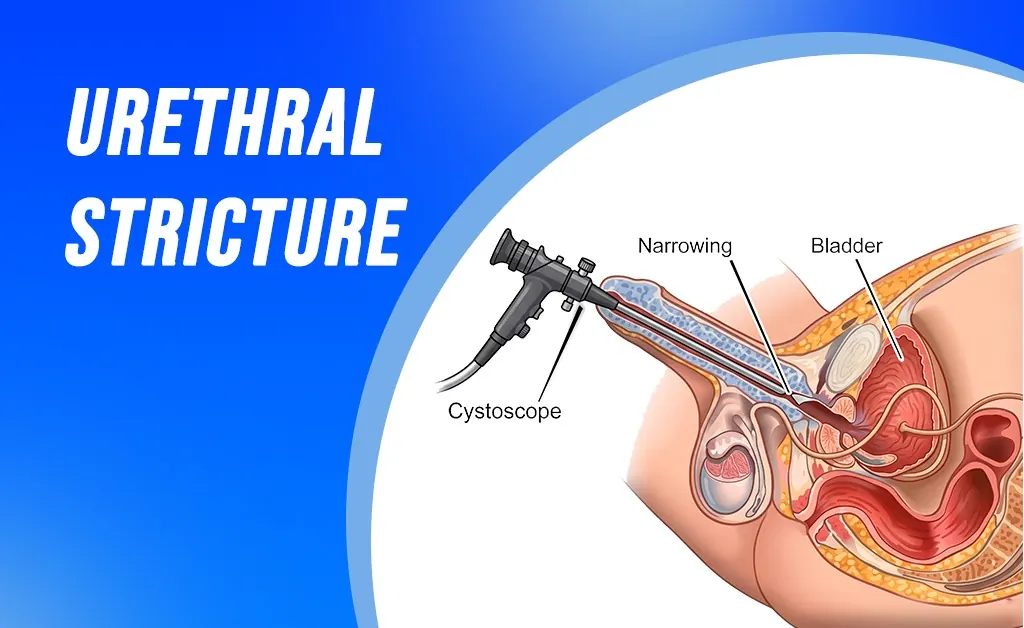
A urethral stricture refers to the narrowing of the urethra caused by scar tissue, inflammation, or injury. When the urethra becomes narrow, it restricts the normal flow of urine from the bladder. The urethra is responsible for transporting urine out of the body. In men, it also carries semen during ejaculation. When a stricture develops, the passage of urine may become slow, weak, or incomplete. Urethral strictures are those that occur in any part of the urethra, and their severity may vary depending on how narrow they are.
In men, the urethra also carries semen. When a stricture develops, urine flow may become slow, weak, or incomplete.
Symptoms of Urethral Stricture
- Weak urine stream
- Difficulty starting urination
- Straining while urinating
- Dribbling after urination
- Feeling of incomplete bladder emptying
- Frequent urination
- Pain or burning during urination
- Recurrent urinary tract infections
- Blood in urine (in some cases)
In severe cases, urinary retention may occur, where the bladder cannot empty properly.
Causes of Urethral Stricture
Injury or Trauma
Physical injury to the pelvic region or urethra may lead to scarring and narrowing.
Medical Procedures
Use of catheters or instruments during medical procedures may sometimes cause irritation or scarring.
Infections
Urinary or reproductive infections can lead to inflammation and scar formation.
Previous Surgeries
Surgical procedures involving the urinary tract or prostate may result in urethral scarring.
Congenital Conditions
Some individuals may be born with abnormalities that narrow the urethra.
Inflammatory Conditions
Certain inflammatory diseases may also cause urethral narrowing.
Complications of Untreated Urethral Stricture
- Urinary retention
- Recurrent urinary tract infections
- Bladder damage
- Kidney problems
Diagnosis of Urethral Stricture
Medical History and Examination
Doctors evaluate symptoms, past injuries, infections, or procedures.
Urine Tests
Used to detect infection or blood in urine.
Imaging Tests
Ultrasound or specialized X-rays help identify the narrowing.
Urethroscopy
A camera-based instrument is used to view the urethra internally.
Treatment Options
Urethral Dilation
The narrowed urethra is gently widened using medical instruments.
Endoscopic Procedures
Minimally invasive procedures to remove or treat scar tissue.
Surgery
In severe cases, reconstructive surgery restores normal urine flow.
Catheter Placement
Temporary catheter use may help drain urine during treatment.
Prevention Tips
- Treat urinary infections early
- Avoid pelvic injuries
- Follow medical guidance during procedures
- Maintain proper hygiene
When to See a Doctor
- Difficulty passing urine
- Weak urine stream
- Repeated infections
- Painful urination
- Blood in urine
Importance of Early Diagnosis
While the condition of a stricture in the urethra may appear to be a minor inconvenience at first, failure to address the symptoms can ultimately lead to further health issues that impact the health of the bladder and kidneys. While learning about the condition and symptoms helps people take proactive measures to maintain their health, understanding the importance can help individuals make a difference in their health.