
Overview
First aid is a critical life skill that equips individuals with the knowledge and ability to respond effectively to medical emergencies. Whether it involves treating minor injuries or stabilizing someone in a life-threatening situation, first aid can make a significant difference in outcomes. The importance of first aid extends beyond immediate care; it is a cornerstone of safety, preparedness, and confidence in handling emergencies.
Why First Aid Matters?
Saves Lives
Quick and appropriate first-aid measures can be the difference between life and death. Administering CPR, stopping severe bleeding, or helping someone who is choking are examples of how immediate action can stabilize a person’s condition until professional medical help arrives.
Reduces Recovery Time
Early treatment of injuries or illnesses can prevent complications and reduce the time needed for recovery. Cleaning and dressing a wound promptly can prevent infection and promote faster healing.
Prevents Situations from Worsening
First aid can prevent a condition from deteriorating. Stabilizing a broken bone, managing a burn, or providing cooling measures during a heat stroke can minimize further harm.
Increases Awareness and Preparedness
Learning first aid fosters awareness about potential hazards in everyday life. People trained in first aid are more likely to recognize risks and take proactive measures to create a safer environment, reducing the chances of accidents.
Essential Components of First Aid
Basic Life Support (BLS)
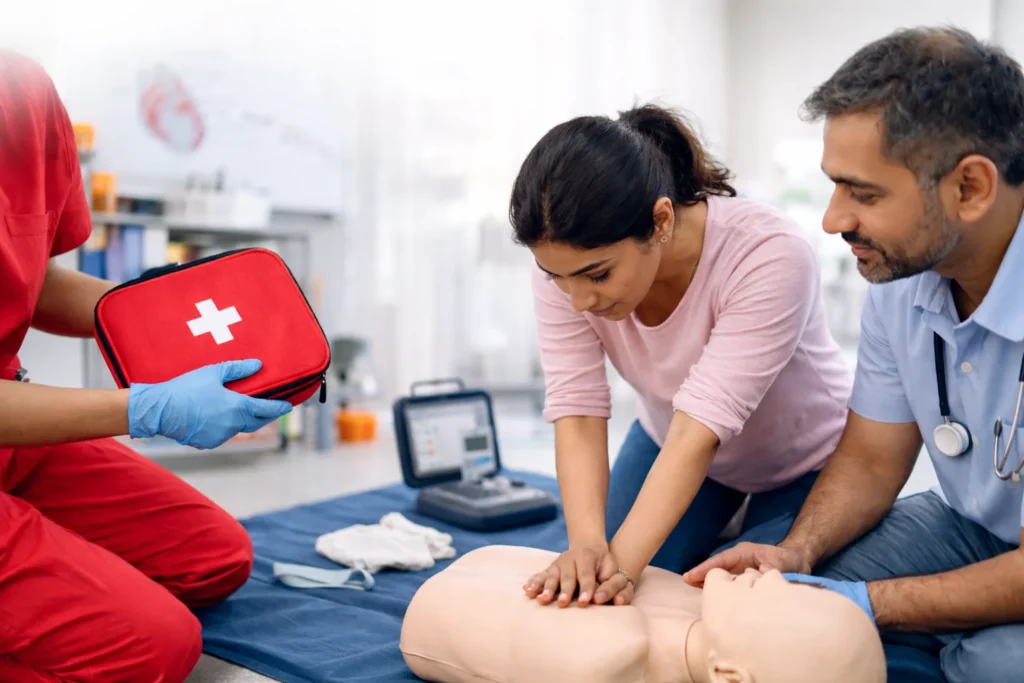
- CPR (Cardiopulmonary Resuscitation): A lifesaving technique used during cardiac arrest to maintain blood flow and oxygen to vital organs.
- AED (Automated External Defibrillator): Understanding how to use an AED can restart a heart in certain cases of cardiac arrest.
Wound Care
- Cleaning and dressing cuts, scrapes, and punctures to prevent infections.
- Managing deeper wounds or severe bleeding using pressure bandages or tourniquets.
Handling Fractures and Sprains
Immobilizing the affected area using splints or bandages helps reduce pain and prevent further damage.
Managing Burns
Cooling burns under running water, covering them with a sterile dressing, and avoiding ice or ointments on severe burns are essential steps in burn management.
Choking Rescue
Performing the Heimlich maneuver or providing back blows and chest thrusts can save someone from choking.
Recognizing and Responding to Medical Emergencies
Recognizing symptoms of heart attacks, strokes, or allergic reactions and acting promptly can save lives. Administering prescribed medications such as epinephrine for severe allergies is also part of first-aid training.
First Aid in Various Settings
At Home
Homes are common places for accidents like cuts, burns, or falls. A well-stocked first-aid kit and basic knowledge ensure family members can handle these situations effectively.
At Work
Occupational hazards vary across industries, and first-aid training is essential in addressing workplace injuries. Regular drills and accessible first-aid supplies are critical.
In Public Spaces
Accidents in public places require immediate attention. Trained bystanders can step in and provide care until emergency services arrive.
In Schools
Teachers, staff, and students benefit from first-aid training to address incidents ranging from playground injuries to allergic reactions.
During Travel or Outdoor Activities
First aid becomes indispensable in remote areas where professional help may not be immediately available. Being prepared for bites, stings, sprains, or other injuries ensures safety.
Building Confidence Through First Aid Training
First-aid training empowers individuals to take decisive action during emergencies. The knowledge and skills gained build confidence, ensuring people feel equipped to respond effectively. Organizations, schools, and community groups often offer hands-on first-aid courses.
The Role of First-Aid Kits
A well-prepared first-aid kit is essential for handling emergencies. A basic kit should include:
- Bandages and gauze
- Antiseptic wipes and ointments
- Adhesive tape and scissors
- Gloves and masks
- Pain relievers and antihistamines
- A first-aid manual
Regularly checking and replenishing the kit ensures readiness when needed.
Advocating for First Aid Awareness
First aid is not just a skill for medical professionals; it is a universal responsibility. Creating awareness encourages more people to seek training and contribute to a safer community. Workshops, demonstrations, and campaigns play a vital role in spreading awareness.
Conclusion
The importance of first aid cannot be overstated. It equips individuals with the ability to act promptly, mitigate harm, and potentially save lives during emergencies. By promoting awareness, encouraging training, and maintaining readiness through proper supplies, communities can build a safer and more prepared environment. First aid is more than a skill; it is a commitment to care, safety, and compassion in times of need.
Need Expert Medical Advice?
Consult experienced doctors at Vedanayagam Hospital for advanced diagnosis, personalised treatment, and compassionate patient care.
- Urology & Nephrology Specialists
- Advanced Diagnostic & Treatment Facilities
- Trusted Care for Kidney & Urinary Conditions