

Overview
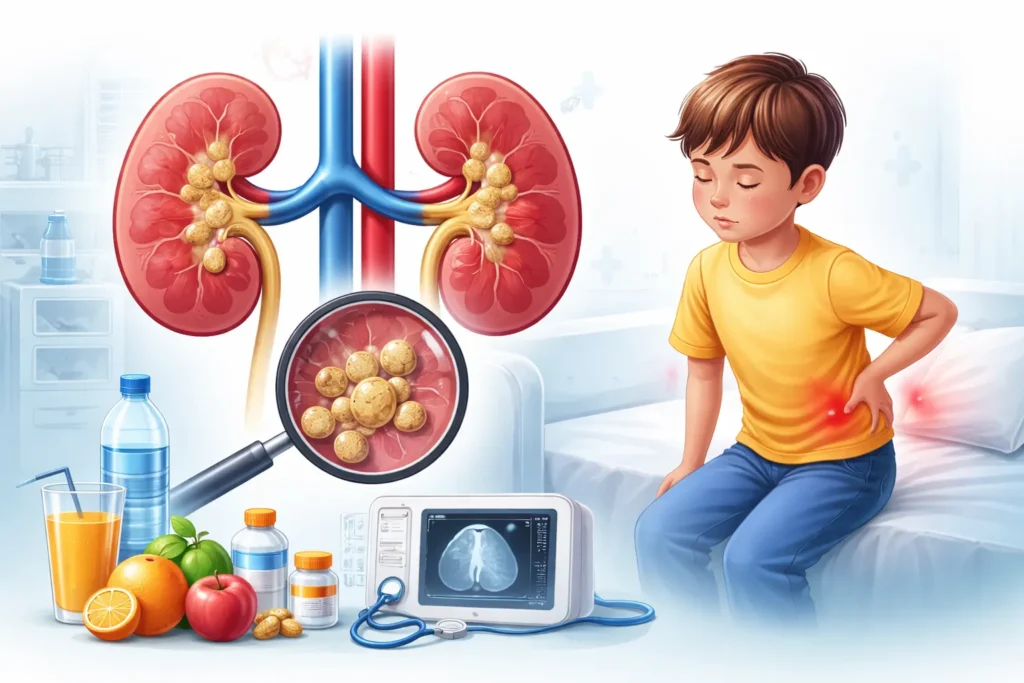
Kidney stones, though more commonly associated with adults, can also affect children. This condition occurs when minerals and salts in the urine crystallize and form hard deposits in the kidneys. While kidney stones in children are less frequent, their occurrence has been rising due to changing dietary habits, hydration patterns, and certain medical conditions. Understanding the causes, symptoms, and preventive measures is essential for early detection and effective management.
What Are Kidney Stones?
Kidney stones are solid masses that develop when calcium, oxalate, and uric acid accumulate in the kidneys and fail to dissolve in the urine. These stones can vary in size and may remain in the kidney or travel down the urinary tract, causing significant discomfort or complications.
Causes of Kidney Stones in Children
Several factors contribute to the development of kidney stones in children.
Dietary Habits
Excessive intake of salt, processed foods, and sugary beverages can increase the risk of stone formation. A diet low in fruits and vegetables, which are natural sources of potassium and citrate, can also contribute.
Dehydration
Inadequate fluid intake is a major factor in kidney stone formation. Insufficient hydration leads to concentrated urine, making it easier for crystals to form.
Medical Conditions
Certain medical conditions, such as urinary tract infections, hypercalciuria (high calcium levels in the urine), cystinuria, and other metabolic disorders, can predispose children to kidney stones.
Family History
A family history of kidney stones increases the likelihood of a child developing them, suggesting a genetic predisposition.
Medications
Long-term use of certain medications, such as diuretics or antacids containing calcium, may contribute to stone formation.
Symptoms of Kidney Stones in Children
Recognizing the symptoms of kidney stones is crucial for timely intervention. While some children may remain asymptomatic, others may exhibit the following signs:
- Severe pain in the abdomen, side, or back
- Frequent and painful urination
- Blood in the urine, making it appear pink, red, or brown
- Nausea and vomiting
- Persistent urge to urinate, even after emptying the bladder
- Fever and chills, indicating a possible infection
Diagnosis
Diagnosing kidney stones involves a combination of clinical evaluation and diagnostic tests. A healthcare provider may recommend:
- Urine Analysis: To detect crystals, blood, or infections in the urine
- Blood Tests: To assess kidney function and detect abnormalities in calcium or uric acid levels
- Imaging Studies: Ultrasound, X-rays, or CT scans to confirm the presence, size, and location of kidney stones
Treatment Options
The treatment of kidney stones in children depends on the size, location, and severity of the condition.
Hydration
Increased fluid intake helps flush out smaller stones through the urinary tract.
Medications
Pain relievers and medications that relax the urinary tract muscles may be prescribed to ease the passage of stones.
Extracorporeal Shock Wave Lithotripsy (ESWL)
This non-invasive procedure uses sound waves to break larger stones into smaller fragments, allowing them to pass naturally.
Surgery
In cases where stones are too large or cause complications, surgical intervention such as ureteroscopy or percutaneous nephrolithotomy may be required.
Prevention of Kidney Stones in Children
Encouraging Proper Hydration
Ensuring children drink sufficient water throughout the day dilutes urine and reduces the likelihood of stone formation.
Balanced Diet
A diet rich in fruits, vegetables, and whole grains, while limiting salt, sugar, and processed foods, promotes kidney health.
Monitoring Calcium Intake
Calcium is vital for growth and bone health, but excessive intake through supplements or high-calcium foods should be avoided.
Regular Check-ups
Regular medical check-ups and urine analysis can help detect early signs of kidney stones, particularly in children with a family history of the condition.
Limiting Certain Foods
Reducing the consumption of foods high in oxalates, such as spinach, beets, and chocolate, may help prevent stones in susceptible children.
The Role of Awareness
Educating parents and caregivers about the causes, symptoms, and preventive measures is critical in managing kidney stone risks in children. Schools, healthcare providers, and community programs can play a vital role in raising awareness and promoting healthy habits.
Conclusion
Kidney stones in children, though uncommon, are a growing concern. Early recognition of symptoms and risk factors, coupled with appropriate medical care, can significantly improve outcomes. By adopting preventive measures such as maintaining proper hydration, ensuring a balanced diet, and scheduling regular health check-ups, the risk of kidney stones can be minimized. A proactive approach not only protects a child’s kidney health but also contributes to their overall well-being.